Showing posts with label Branding. Show all posts

Sunday, June 19, 2011

Negative Doesn't Always Mean Negative

PR buzz is not always perfect. As a PR pro, you know that you can do a lot of work, but still need a little bit of luck.

When you work with reporters, you do not have full control of what gets shared; even if YOUR prep work is spotless. You may have created great keywords and statements that can get misdirected, or your product may be poorly reviewed. It's really out of your hands. However, bad news is not ALWAYS bad. It's still news, right?

Currently, I work with a client that is very unique and has gained success with a niche market. They are trying public relations for the first time ever and getting a lot of buzz. However, the mainstream market does not particularly love the product and are willing to say it. My client knows and even says they are not a brand for everyone, but he still gets nervous after reading a negative review or hearing a negative comment. Nonetheless - they are getting ALOT of publicity. One review did come back negative, but they still placed a large photo in the review and said where someone could buy the item. This is what counts.

Again, in a situation when a reporter does give you negative feedback - don't be surprised. This can happen! I was reading about a similar situation where a brand received negative PR after reporters tried the product and didn't enjoy it. The company came out making a statement that said too many went way too far with reviews and said they wouldn't release any more items to be tried until further notice. This is a poor move and never do this. PR works symbolically with media - they need each other. So, if you think something, don't way something. You don't want the reporters on your bad side even more.

Wednesday, April 20, 2011

10 Items Well Known Just Because of their Brand Name

It's the pinnacle of branding. Your brand's name replaces the actual name of the product. It's crazy cool if you can get your brand to this level.

Dumptster: The actual name is front loader waste container or mobile garbage bin. The name dumpster was first used in 1936, by the Dempster Brothers, who patented this style of trash container one year later.

ChapStick: It's called lip balm. You probably knew that, but did you know it was invented in the 1880s by a doctor and pharmacologist in Virginia? Dr. Charles Browne Fleet sold the rights to the lip balm for $5. Today, Pfizer owns the brand.

Hula Hoop: Humans have probably been using some form of the toy hoop-as it's known generically-for centuries, maybe millennia. But, the Hula Hoop came about in the 1950s, when Wham-O toy company introduced the plastic hoop we known today and trademarked the term Hula Hoop. You know, for kids.

Band Aid: The adhesive bandage was invented in 1920 by Earle Dickinson, an employee of Johnson and Johnson. He created it because his wife frequently cut and burned herself while cooking. What a progressive guy.

Kleenex: Facial tissue is the generic name, and legend has it that the product was created by Kimberly-Clarke Corp. for use in gas masks during World War I. Kimberly-Clarke invented the facial tissue as it's known today in 1924. Gesundheit.

Onesies: It's called an infant body suit-sounds so '80s - but the brand Onesies, owner by Gerber Childrenswear, has become the common name for it. Aww...

Post-It: The corporation 3M invented the Post-It note in 1968, but the product's generic name is sticky note, repositional note. How's that for jargon?

Wite-Out: The generic name is correction fluid, and it was invented in the 1960s by insurance company clerk George Kloosterhouse, who enlisted the help of his friend Edwin Johanknecht. They trademarked the term Wite-Out in 1974

Styrofoam: This might have the most convoluted generic name - extruded polystyrene foam. In 1941, researchers at Dow Chemical "rediscovered" a method used by Swedish inventor to create foam polystyrene. Dow Chemical owns the trademark today.

Frisbee: That flying object that you're dodging at the beach is actually called flying disc. Frisbee is a registered trademark of the Wham-O toy company - which you may remember from such popular toys as the Hula Hoop. Until 1958, Frisbie Baking Co. of Bridgeport, Conn., made pies, among other products. The pie tins - once relieved of crust and filling - proved aerodynamic, and New England college students began tossing and catching them. Many colleges have claimed to be home of "he who was first to fling."

Want to see more products known by their brand names? BuzzFeed has named 32.

Sunday, December 12, 2010

Does the New Microsoft Store Image Work Or Are They Just a Bad Copycat?

It looks like an Apple store; employees wear bright color T-shirts just like Apple employees and there are all sorts of gadgets spread out for customers to try, just like in an Apple store. But, it's not an Apple store - it's the new breed of Microsoft stores. But, do the new Microsoft stores work as successful as Apple stores? Some say no.

I went shopping at Mall of America a few weeks ago and noticed that right across from the popular Apple store there was a store that looked just like it with a different logo - it took me a moment to realize it was a Microsoft store. I walked through and wondered how well this new image was working for them, copying their largest competitor's image. Personally, I thought it was odd.

Apparently others feel the same. People say it looks like the Apple brand, but doesn't feel the same. They say it doesn't have that same 'cool' factor that Apple's brand has. The main reason it has been decided was because the main difference between the two brands is that Apple products are exclusively sold at Apple stores. You can't find them anywhere else. And secondly, Apple stores only sell Apple products. Compare this to the Microsoft which sells a variety of product brands.

What do you think?

Wednesday, December 1, 2010

Want to feel sexy? It's all in the bag, study finds

With the Victoria's Secret Fashion Show airing last night, I'm feeling a little more sexy than usual... Is this true though, can a brand change the way you feel about yourself?

If you feel a little snobbier when driving a BMW, or feel a little more outdoorsy if you slip on your North Face, or feel a little more hip when you use your new MacBook Air - you're not alone. It's widely known that a product's brand image has a profound impact on your own self image. It's even been proven in a recent study by the University of Minnesota, that now we actually sometimes change our own personalities to match a brand we want to be associated with.

"For example, if you want to be conveyed as adventurous you may buy a Harley-Davidson motorcycle or wear casual clothes from stores such as REI," says Deborah Roedder John, a marketing professor at the U of M and one of the authors of the study published in the December issue of the Journal of Consumer Research. (You can find the full report here, but a subscription is required.)

Brands are like badges - For one part of the study the U of M researchers recruited about 100 volunteers at a mall, all women between the ages of 18 to 34, and asked each of them to carry around a shopping bag of their choice for an hour: Victoria's Secret, Old Navy or Limited Too. Everyone chose the Victoria's Secret bag. When they came back an hour later they were given a survey about how they felt about themselves. The survey results showed that the 'personality of Victoria's Secret' is sexy, glamorous and feminine. (No word on whether or not the bag made them feel like a 15 year old.)

The same researchers did a study with a pen with the MIT logo on it. The results came back similar saying that they felt smarter when using the MIT pen.

This idea is called "entity theory," and it means your the type of person who seeks our products to make you feel a certain way about yourself. But, if you're not a type of person who is affected by a brand you buy, you really won't feel anything at all during a study like this. The second theory is called the "incremental theory"

So, maybe this theory will help shoppers this holiday season save money. You really don't need to buy the brand you believe makes you who you are. All you really need to do is be associated with it and you'll still feel this same benefit.

What do you think of this idea? Have you experienced it or do you think it's full of crock?

Wednesday, May 19, 2010

When PR Doesn't Matter Anymore: The BP Oil Explosion

BP engineers have been unable to stem the torrent of oil gushing by the hundreds of thousands of gallons into the Gulf of Mexico each day following the explosion that sank the Deepwater Horizon offshore drilling rig last month. Weeks later, the BP oil spill is still a environmental catastrophe and PR nightmare. Tar and oil are still being found in new places, more wildlife is dying every day and BP still has not fixed the spill. Shouldn't companies have a contingency plan that prepares them to quickly fix their wrong doing and respond to the public well when a worst case scenario happens?

Of course a company should! This is a perfect example of a corporate responsibility and public relations disaster. Regardless of how BP responded right away, apologizing, taking responsibility, trying to fix the spill, etc. Yet, BP hasn't fixed the problem! That's when a strong brand history and an immediate PR crisis communications plan just don't matter anymore. PR needs to be followed up with action. This why there needs to be a complete contingency and response plan for every company. Especially for something that truly could happen. For example, if you're an oil company, you should probably have a response for an oil spill at any drilling area of yours.

I was angered after watching Mike Williams 60 Minutes story on the spill. According to Williams the BP explosion was the result of the company's desire speed up drilling and to save money. Drilling faster actually made the bottom of the well split open.

Williams story told that just four weeks prior to the explosion, the well's most vital piece of safety equipment was damaged when a worker accidentally bumped into a joystick that applied hundreds of thousands of pounds of force onto a closed blow out preventer which was closed by a rubber gasket called an annular. Congress is currently looking into other things incidents that occured at BP leading up to the spill which is becoming known as the worst environmental disaster in U.S. history.

In my opinion, it will be amazing if BP can 'dig' out of this huge hole they're in. I'm not sure they'll have the money of the customers to stay in business after everything is finally cleaned up.

Monday, May 17, 2010

Would you Brand Yourself with your Company Logo?

Most companies prefer staffers to not have any tattoos visible, but at some work places tattoos are being used for branding purposes.

At Anytime Fitness, one employee got the health club chain's purple running man logo tattooed on her upper left arm. She is just one of the more than 200 other employees among the company's nearly 1,300 clubs worldwide who have undergone the needle in the name of Anytime enthusiasm over the past several years. At least 20 of them work at the headquarters in Hastings, Minnesota.

"We bleed purple here at corporate," said CEO Chuck Runyon.

Many times at annual conferences, a tattoo artist is on hand to oblige employees who are feeling particularly dedicated.

While it's common for businesses to hand out temporary tattoos of their logos, this is taking products branding to a very personal, and some may extreme, level.

Monday, March 1, 2010

Caribou Gets a Makeover

The latest phase in a year's worth of rebuilding and rebranding at Caribou Coffee hits the town today. The new look ranges from the subtle brown cup covers to the new-looking Caribou Coffee logo built out of a coffee bean. The company's theme remains unchanged - "Life is short. Stay awake for it."

This change, along with others, are part of a yearlong revitalization of a brand that was languishing a year ago when the company reported a $16.8 million loss. The hope is that all these changes will help the company reconnect with its customers. Caribou is a distant second to Starbucks in the coffeehouse industry, currently having 515 stores, including 112 franchised and licensed. The company also has a commercial wing that sells branded products to grocery stores, airlines, hotels and other merchandisers. Caribou is the official coffee partner of the Minnesota Twins in their new Target Field Ballpark.

The new Caribou includes:
  • A deeper blue backdrop for the caribou
  • Brown coffee cup lids - These proved to be more popular; they don't show lipstick marks!
  • Messages to coffee cups and napkins called "Bou-isms" in reference to the "Bou" nickname. Messages will say "Spend time with your kids, tomorrow they're a day older" and "Dare to adventure" and "Don't wait for New Year's to make a resolution."
  • New store decor
  • And coming soon, billboards and other outdoor venues that designers hope will resonate with consumers. These should start popping up in April.

Caribou Coffee has new leadership, CEO Mike Tattersfield, the third leader in three years. Under his direction the company has shut some stores, is now focused on its core markets, added new products and is concentrating on upping customer service. Last month Caribou added "handcrafted" oatmeal to its menu following the addition of new chocolate beverages late last year. The company now is testing in-store baked items in 25 of its Minneapolis locations, and five flavors of Tea Latte Fusion are being introduced this week. I think this rebrand is a great idea for Caribou Coffee. Since Caribou Coffee started 18 years ago, their competition has increased greatly, as many more coffee shops have started up. The company has had a rough patch financially and really does need to remind their customers why they're great.

Thursday, February 4, 2010

Toyota Grapples with PR Bungles and Tarnished Brand

Toyota Motor Corp -- one of the most savvy car brand-creators in Asia is floundering. Since the company has been faced with an unprecedented recall of millions of vehicles, rivals have been swooping in on its customers. The motor company has created a PR nightmare by consistently playing down the recurring complaints of unintended acceleration, breaking the cardinal rule in crisis management: assume the worst.

My PR background says that people want to know what's going on and that Toyota should fess up and take full responsibility, be empathic to the victims and their families and be in control by outlining the problem and how they intend to solve it. Right now, Toyota President Akio Toyoda, the grandson of the company's founder, has not formally addressed the public or media on the recall problems. Even when they announced the recall initially, they shouldn't have just said "We're going to do a recall." They should have explained what was going on. Also, there should have been a heartfelt apology from the top.

Through November, the company continued to blame loose mats for the problem. That has eventually spread to a potential problem with accelerator pedals, and U.S. safety regulators are now renewing efforts to re-confirm whether the electronic throttle control system could have been at fault.

At a news conference in Nagoya n Tuesday,the first appearance by an executive form headquarters since the recall expanded last week, there was no deep bows, a standard fixture in Japan when a firm declares it is responsible for its mistakes.

Now, the problem seems to have spun out of control. At a more recent news conference, a Toyota executive in charge of quality, Shinichi Sasaki, said part of the reason Toyota decided to use U.S. auto parts maker CTS's accelerators was to help contribute to the local U.S. economy. That was not what customers want to hear, especially when tragic memories of the car crash incidents are still fresh.

So, what has Toyota done to reach out and communicate the problem with its customers? Toyota ran full-page ads in major U.S. newspapers on Sunday alerting consumers to the recall and production shutdown. Jim Lentz, president of Toyota Motor Sales U.S.A., appeared on U.S. TV and expressed regret for worrying drivers of its cars. Lastly, they are conducting a very extensive recall, which shows they are taking the recall seriously.

Since this issue with Toyota, U.S. motor company's sales have been up. Toyota's sales have slipped 16 percent and it could fall further. They have lost an estimated 20,000 in sales after it stopped selling eight models because of the defective gas pedals. Ford announced that its sales have rose 25 percent, Hyundai said sales rose 24 percent for the month, GM said its sales increased 14 percent and Nissan rose 16 percent.

Tuesday, January 5, 2010

What's Going on With Rebranding?

The trendy retailer giant, Target, has made some big changes in its marketing by going warehouse. Alongside their fashionable items, in the part of the store normally used for seasonal merchandise, the retailer has stacked hulking packages of bottled water and paper towels on pallets. Shelves are lined with supersize jugs of laundry detergent and bulk-size packages of batteries. Shoppers can dig through bins of $1 neon-colored flip flops and packs of athletic socks for $7.

Target believes that right now consumers are focused more on the price of toothpaste than buying a new bedroom lamp. The marketing plan is all part of a seven-week promotion, "The Great Save," started showing up in stores over the weekend. It's one of the retailer's boldest moves yet to signal to recession-battered consumers. Recently, Target's profits have plunged and they want to compete with warehouse stores like Costco and Sam's Club, which they believe have taken a lot of shopper's wallets in the past year. This just may work for them because they can differentiate themselves by not charging membership fees. I just know that Target walks a thin line. They need to be careful they don't change their stylish brand too much otherwise it could hurt them the other way.

When I read this story, I found it very funny because of the marketing changes their large competitor, Walmart made this summer. July 1st, 2009 Walmart recreated their very dry, hard logo and image into something that looks more organic and friendly. Their logo and name traditionally was all in capital letters and hyphenated with a star. Now, the name is capitalized, but the rest is lower case letters, no hyphen and there is a sunburst at the end of the name. Inside the store, changes have been made to make Walmart stores look less 'warehousey' and more department storish. There was no real reason for the change, but it coincided nicely with complaints about their environmental policies and court cases involving their labor laws.

Does rebranding work? I guess time will tell. As a marketer I believe that when you create a brand, you should stay true to it in order to properly 'build' it. However, if you can't survive as is, you must make a change. It's interesting that both of these similar retailers are taking on traits of the other to make more profit. This may cause concern for both of their traditional customers because they may not feel as comfortable going to something that 'feels' different than what they're use to. The coming year(s) will tell which company markets better; stays true to who they are and is able to pick up the other's customers along the way.

Thursday, November 5, 2009

Importance of Branding vs. Generational Changes

How important is it to create a company or product brand and then stick with it? I'd say very important, because all of the big brands have done a great of doing this. In most cases, just by seeing a popular brand's logo, colors or trademark statement will make you think of their them or their product. But, what happens when your company or product has been around so long that your brand doesn't market well with your target audience, and you must make changes in order to gain their interest. I'd argue that is equally as important.

I read an interesting article in The New York Times Business section today about the Walt Disney Company's new product. For decades, the Walt Disney Company has kept the $5 billion dollar image of Mickey Mouse frozen under glass, fearful that even the smallest changes could tarnish the brand. However, the Walt Disney Company is concerned that Mickey has become more of a corporate symbol than a beloved character for recent generations of young people. Now, Disney is taking the risky step of re-imagining him for the future.

The first step in Mickey's transition will appear next year when a new video game, Epic Mickey, in which the formerly squeaky clean character can be cantankerous and cunning, as well as heroic, as he traverses a forbidding wasteland. At the same time, in a parallel but separate effort, Disney has quietly embarked on an even larger project, to rethink the character’s personality from the way Mickey walks and talks, to the way he appears on the Disney Channel and how children interact with him on the Web, even what his house looks like at Disney World.
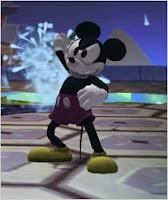
This week, the project got even more excitement to start after the announcement that, after 20 years of negotiations, the company has finally received the blessing of the Chinese government to open a theme park in Shanghai. This will potentially unlock a new giant market for all things Mickey.The Disney executives are moving carefully, and trying to keep a low profile, as they discuss how much they dare tweak one of the most durable characters in pop culture history to induce new generations of texting, tech-savvy kids to embrace him. Disney executives will keenly watch how Epic Mickey is received, to inform the broader overhaul.

While Mickey remains a superstar in many homes, particularly overseas, his popularity has not grown, but stayed stationary. This has resulted because of the new generation of Americans, those who grew up with Nickelodeon and Pixar. They know him, but may not love him. Domestic sales in particular have declined: of his $5 billion in merchandise sales in 2009, less than 20 percent will come from the United States.

I have no doubt that Disney will do a good job rebuilding the Mickey brand. The Walt Disney Company is has a long history of meeting their customer's wants exceptionally.

After some research, here are what I believe are the best branding tips for any company or product:

  • Defining your brand. Defining your brand is like a journey of business self-discovery. It can be difficult, time-consuming and uncomfortable. It requires, at the very least, that you answer the questions: What is your company's mission? What are the benefits and features of your products or services? What do your customers and prospects already think of your company? What qualities do you want them to associate with your company?
  • Stand for something. People latch on to something they can understand and appreciate.
  • Integrate your brand. Branding extends to every aspect of your business--how you answer your phones, what you or your salespeople wear on sales calls, your e-mail signature, everything.
  • Do what you say you’re going to do. I know it may sound like common sense, but one of the primary drivers of brand loyalty is a consistent experience.
  • Realize that you’re not in control of your brand. That’s right, you only set the direction for your brand. Your actual brand image is determined by your audience.
  • Branding is as much about your people as anything else. Never forget that the best interactions come from one-on-one conversations between executives, employees, suppliers, and customers. Employees that want to help and do the best job possible go a long way.